



A dead battery can quickly ruin your day, but choosing the wrong tool can waste even more time. While jump starters and battery chargers both deal with battery problems, they serve very different purposes. In this guide, we break down the real differences between a jump starter vs battery charger, when each tool makes the most sense, and which one deserves a place in your garage or emergency roadside kit.

If your car battery dies, should you reach for a jump starter or a battery charger?
While both tools help with battery-related problems, they serve very different purposes. Knowing the difference matters because using the wrong tool can waste time, leave you stranded, or even damage your battery.
In this guide, we break down the key differences between a jump starter vs battery charger, when each tool makes the most sense, and whether it’s worth owning both for complete roadside and garage preparedness.
Quick Answer: Jump Starters Vs. Battery Chargers - Are They The Same Thing?
No, jump starters and battery chargers are not the same thing. A jump starter delivers an instant burst of power to help start a vehicle with a dead battery, while a battery charger slowly recharges and maintains a battery over several hours or days. So basically, if you need emergency roadside power, you need a jump starter. But if you want to restore or maintain battery health at home, you need a battery charger.
What Is A Jump Starter?
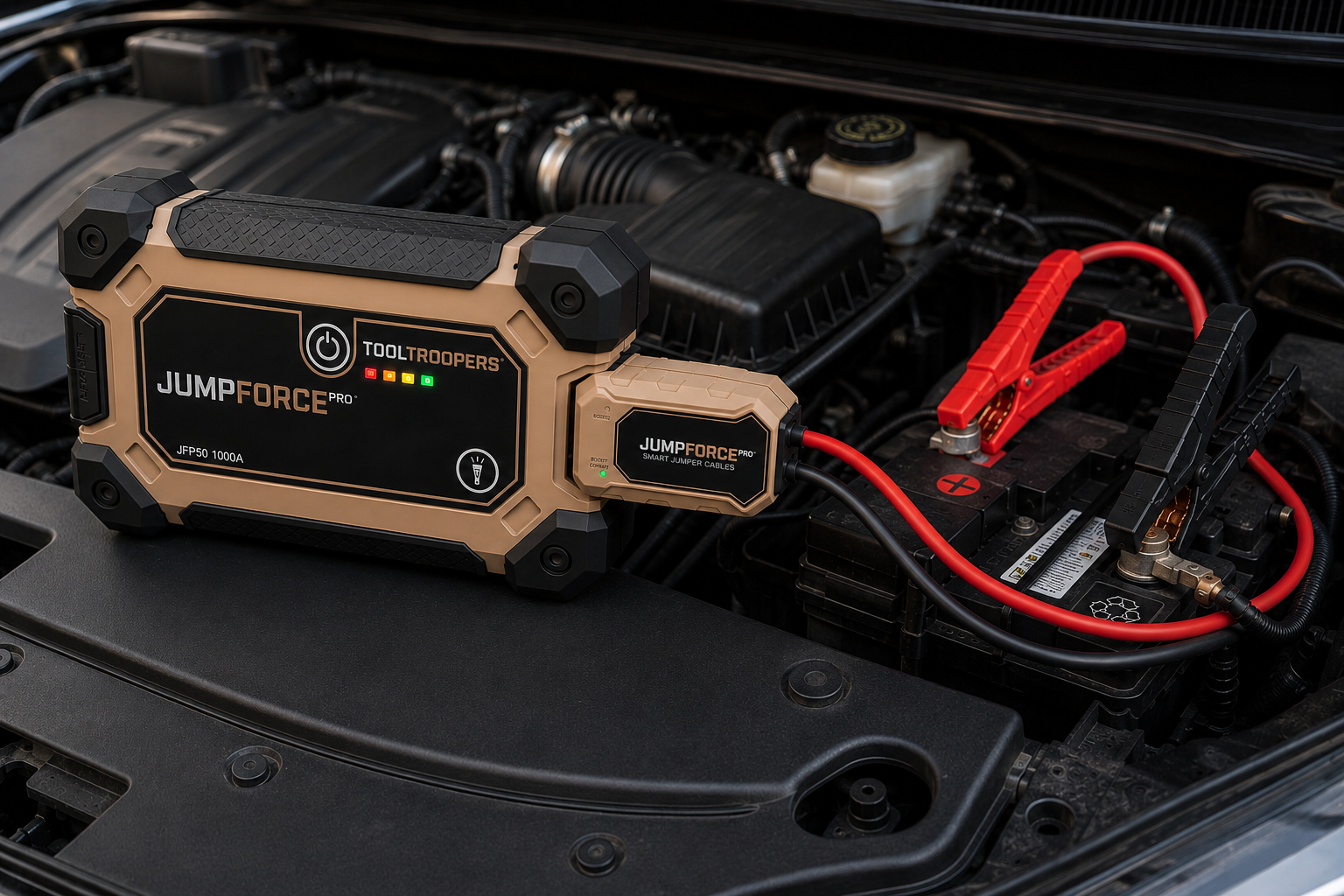
A jump starter is a portable battery-powered device designed to deliver an instant burst of power to help start a vehicle with a dead or weak 12V battery.
Unlike jumper cables, a portable jump starter doesn’t require a second vehicle, making it one of the most useful emergency roadside tools you can keep in your trunk.
Modern portable jump starters are typically powered by lithium-ion batteries, making them compact, lightweight, and easy to carry. Depending on the model, some jump starters are designed for small cars, while larger high-amperage units can handle trucks, SUVs, RVs, boats, and other vehicles with larger engines.
A jump starter is ideal when:
-
Your battery suddenly dies in a parking lot or driveway
-
You commute long distances or travel in remote areas
-
You live in cold climates where batteries fail more often
-
You take road trips, camping trips, or RV adventures
-
You want emergency backup power without relying on roadside assistance
The most important thing to understand is that a jump starter does not fully recharge your battery. Its job is simply to provide enough temporary starting power to crank your engine so the vehicle can start. Then, once the engine is running, your alternator takes over and begins recharging the battery.
If your priority is fast roadside emergency power, a jump starter is the right tool.

Image courtesy of Newpowa @ Unsplash.com
What Is A Battery Charger Or Battery Maintainer?
A battery charger or battery maintainer is a device designed to recharge a depleted 12V vehicle battery and maintain its charge over time. Unlike a jump starter that boosts a dead battery, a battery charger slowly restores battery capacity over several hours or overnight.
Most battery chargers plug into a standard wall outlet or AC power source, making them ideal for home garages, workshops, and long-term vehicle storage rather than roadside emergencies.
Similarly battery maintainers (sometimes called trickle chargers or smart chargers) are especially useful for vehicles that sit unused for extended periods, since they help counteract natural battery self-discharge and prevent weak battery issues.
A battery charger makes the most sense when:
-
Your car battery is weak but not permanently damaged
-
You store seasonal vehicles like an RV, motorcycle, boat or ATV
-
You want to maintain battery health during winter storage
-
You need to slowly recharge a depleted battery safely
-
You want to extend battery lifespan through proper maintenance
The key difference is that a battery charger restores battery charge, whereas a jump starter gets your engine running immediately.
If your battery dies in your driveway when the vehicle has been sitting unused for a long time, a charger may help. But if your battery dies in a parking lot while you're on a cross-country road trip, you need a jump starter.
Jump Starter Vs Battery Charger: Side-By-Side Comparison
Need help deciding which to add to your toolbox or your car’s emergency roadside kit? Here’s a quick side-by-side breakdown of the specific uses, costs, and pros and cons of both a jump starter and a battery charger.
Which One Should You Buy? A Jump Starter Or A Battery Charger?
The right choice, ultimately, depends on how you plan to use your device.
If your biggest concern is emergency roadside breakdowns, dead batteries in parking lots, winter no-start mornings, or long-distance travel, a jump starter is the better investment. It gives you instant starting power without needing another vehicle, jumper cables, or access to a wall outlet.
However, if your priority is battery maintenance, long-term storage, or keeping seasonal vehicles healthy, a battery charger or maintainer makes more sense.
For many drivers, the ideal setup is owning both. A simple way to think about it:
-
Buy a jump starter if you want emergency backup power
-
Buy a battery charger if you want long-term battery maintenance
-
Buy both if you want complete battery protection at home and on the road
For most everyday drivers, however, a portable jump starter is often the more immediately useful tool because battery emergencies rarely happen when you're conveniently parked beside a charger in your garage.

Conclusion: Jump Starting Vs Charging Your Battery
Both tools have their place in the garage. But if your priority is staying prepared for real-world roadside emergencies, a portable jump starter is hard to beat.
Just remember that dead batteries rarely happen at the perfect time, in the perfect place, or with a wall outlet nearby.
That’s why we believe every driver should keep a dependable jump starter in their vehicle.
Our Top Emergency Pick
Skip The Hassle. Keep Emergency Starting Power In Your Trunk.
If roadside emergencies are your biggest concern, a dedicated jump starter makes far more sense than relying on jumper cables, another vehicle, or waiting for roadside assistance. JUMPFORCE PRO delivers rugged, compact emergency backup power when you need it most.
$249.00
Shop JUMPFORCE PRO Now →


Frequently Asked Questions - Jump Starter Vs. Battery Charger
Can a jump starter charge a car battery?
No, a jump starter does not fully charge a car battery. A jump starter delivers a short burst of high current to help start a vehicle with a dead battery, but it is not designed to recharge the battery over time. Once the engine starts, the alternator typically begins replenishing battery charge.
Can you use a battery charger to start a dead battery?
Not immediately. A battery charger cannot provide the instant emergency boost that a jump starter can. Instead, it slowly recharges a depleted battery over several hours or overnight. If you need to get back on the road quickly, a jump starter is the better tool.
Do I need both a jump starter and a battery charger?
For complete battery preparedness, yes. A jump starter is best for emergency roadside breakdowns and dead battery situations, while a battery charger or battery maintainer is best for long-term battery care, storage, and maintaining battery health. Many drivers benefit from owning both.
What is a battery maintainer?
A battery maintainer, also called a trickle charger or smart charger, is a device that delivers a low, controlled charge to keep a battery at an optimal charge level. Battery maintainers are ideal for vehicles that sit unused for extended periods, including cars, trucks, motorcycles, boats, RVs, and seasonal vehicles.
Is it safe to leave a battery charger connected overnight?
Usually yes, if you’re using a modern smart charger. Most newer battery chargers automatically switch to maintenance mode once the battery reaches full charge. However, older manual chargers should not be left unattended for extended periods. Always follow the manufacturer’s instructions.
Which is better: jump starter or battery charger?
It depends on your goal. Choose a jump starter if you want fast emergency starting power for dead batteries. Choose a battery charger if you want to recharge, restore, or maintain a weak battery over time. If you want both roadside emergency protection and long-term battery maintenance, owning both is ideal.
Can a battery charger fix a completely dead battery?
Sometimes. If the battery is simply deeply discharged, a battery charger may restore it. However, if the battery is damaged, sulfated, swollen, leaking, or has reached the end of its lifespan, charging may not help and replacement may be necessary.
Is a jump starter better than jumper cables?
For many drivers, yes. Portable jump starters don’t require another vehicle, are faster to deploy, and reduce the hassle of waiting for roadside assistance or another driver. Jumper cables still work—but they require access to a second vehicle with a healthy battery.